A tray for fresh protein combining performance and circularity
March 9, 2026
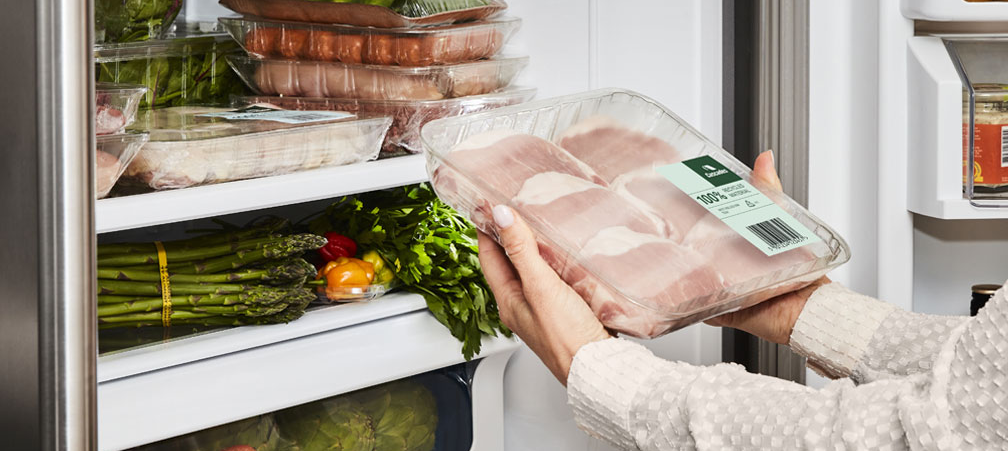
In the face of growing regulatory pressure and consumer expectations for sustainability, a major Canadian retailer called upon Cascades to revamp its fresh protein packages. Their objective was to replace virgin EPS with a recyclable solution without affecting the packaging’s durability or shelf appeal.
Issues and objectives
Reduce the environmental
footprint of polystyrene trays
As it is difficult to recycle, polystyrene was increasingly incompatible with the retailer’s sustainability goals. We needed a solution adapted to the circular economy that met the new regulatory requirements.
Maintain freshness
and quality
Changing material should not compromise the products’ shelf life. The new packaging had to effectively protect food.
Meet consumer
expectations
Today’s consumers expect attractive, yet practical packaging that helps reduce their environmental footprint. The solution therefore had to inspire confidence and reflect the brand’s values.
A solution born of listening and collaboration
From the outset, our team focused on collaboration. Together, we analyzed the needs, operational constraints and expectations of the retailer’s customers.
The result:
An rPET (polyethylene terephthalate) tray, made from 100% recycled materials, with a distinctive and functional design capable of meeting all expected performance criteria in terms of rigidity, food safety and operational efficiency.
Better preservation of freshness
Tests have shown that this tray extends protein’s freshness up to two days1 longer than the flat-bottomed rPET models. This breakthrough helps reduce food waste on store shelves.
1 Source: Itega report, Validation of rPET Tray Performance for Fresh Beef Protein Packaging, April 2025
Compared to Cascades flat-bottomed rPET models.
A solution with a strong environmental impact
Designed for circularity in mind, this packaging incorporates 100% recycled content and is itself recyclable, guaranteeing a beneficial loop that limits waste. Based on the life cycle analysis conducted by Ageco in 2023:
- An rPET tray reduces greenhouse gas emissions by 76% and extraction of non-renewable resources by 88% compared to virgin PET trays2, since it uses recycled material that requires less energy to produce and avoids extracting new resources.
- The same logic applies when compared to virgin polystyrene trays—Cascades’ rPET trays reduce GHG emissions by 34% and non-renewable resource extraction by 68%3.
- Since its implementation, more than 150 million rPET trays have been manufactured to replace virgin polystyrene or PET trays, thus significantly reducing the retailer’s environmental footprint4.
2 Life-Cycle Assessments of Cascades trays, Groupe AGÉCO, Montreal, Eco-calculator version, July 2024.
Our processor-grade 100% rPET tray compared to a competitor’s virgin PET tray currently on the market.
3 Life-Cycle Assessments of Cascades trays, Groupe AGÉCO, Montreal, Eco-calculator version, July 2024
Our processor-grade 100% rPET tray compared to a competitor’s virgin polystyrene tray currently on the market.
4Annualized volume estimate based on internal data provided by the grocer in Canada (2025).
Award-winning innovation
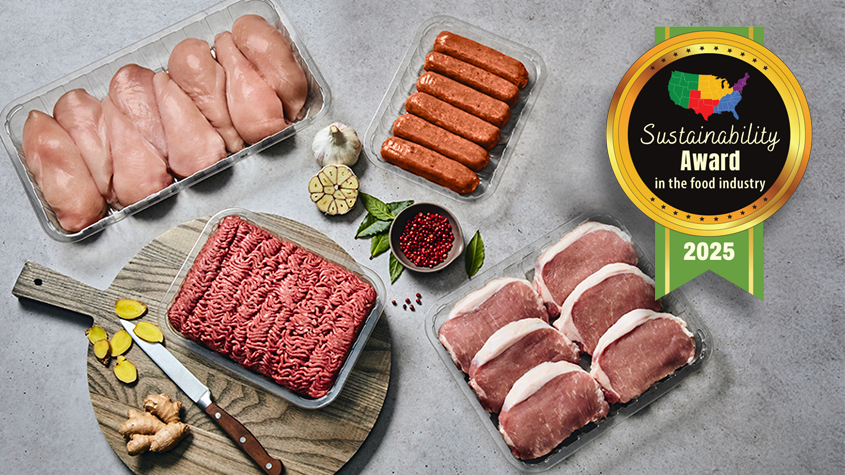
Cascades received the 2025 Sustainability Award from The Shelby Report for this innovative project in fresh protein packaging. This award highlights our unwavering commitment to maximizing our customers’ potential by minimizing their environmental footprint. It’s also a great recognition of our ability to turn major client objectives into tangible and effective solutions.
Practical results
A solution that closes the loop
By selecting a recyclable tray made from 100% recycled materials, the retailer has incorporated a circular solution that values resources rather than discarding them. This approach draws on Cascades’ expertise in designing integrated packaging solutions that protects products, provides optimal performance and adapts to the realities of the protein market. This initiative showcases our ability to combine operational efficiency with environmental responsibility.

Circular solution

Cascades Expertise

Environmental responsibility
A choice aligned with market expectations
A survey of more than 800 North American consumers revealed that:
66% are likely to recycle a rigid tray versus only 38% for a polystyrene tray.
63% feel that “Made from recycled content” improves their perception of a given packaging5.
5 Cascades Web Survey, 807 North American respondents, April 14 to 27, 2025.
A way to boost shelf appeal
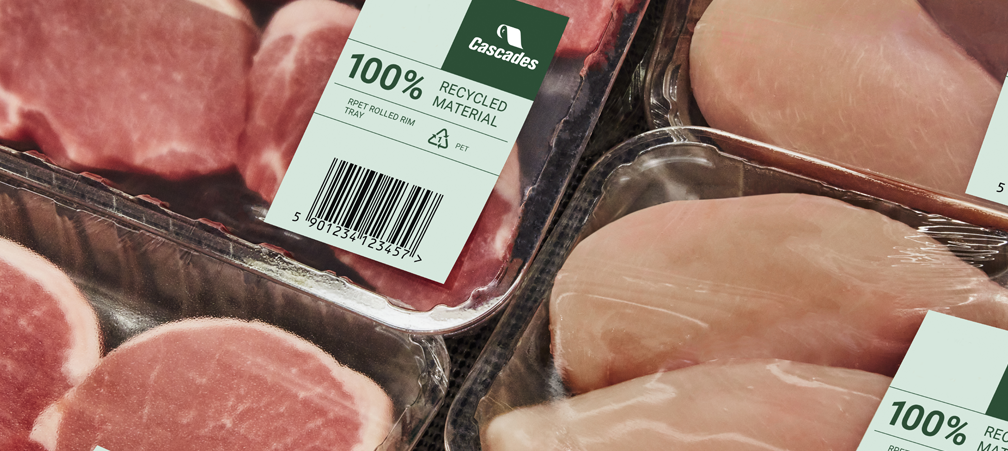
Despite the use of recycled material, often perceived as less transparent, the tray stands out through its flawless clarity and meticulous design. It both showcases products and strengthens the brand’s image. Its blend of responsibility and aesthetics thanks to a clear and glossy finish that reflects the content’s quality. A visually strategic choice that elevates the product and drives the purchase decision.
A win-win transition
This project proves we can extend the life of plastics by developing packaging based on 100 % recycled content, without compromising quality, efficiency or the customer experience.
Through active listening and tailor-made design, Cascades helped the retailer reach a key milestone in its packaging goals while tangibly improving its operations and delivering real value to consumers.
In a market as regulated and demanding as fresh protein, that achievement is a great example of how our expertise, agility and commitment to eco-design make all the difference.