Consume less, consume better.
At a time when environmental crises are a growing concern, people are looking for concrete ways to reduce their ecological footprint.
Retailers, grocers, distributors, processors and more are being questioned by consumers eager to make more responsible purchases. How can they reassure consumers about the impact of products they sell? How can they themselves ensure that they are making informed choices when dealing with manufacturers?

Manufacturers whose products undergo life-cycle assessments (LCA) can clarify these choices by providing objective answers through a rigorously conducted science-based process.

360-degree environmental picture
The market is full of products promoted as "environmentally responsible". However, telling which ones actually have a smaller footprint is a challenge. Exactly what criteria must be met for a product to be considered “environmentally responsible”? What about its inputs? Its recyclability? The amount of recycled material it contains?
Each stage in a product's "life" influences its environmental impact. Toilet paper, boxes, cars, cell phones—life cycle impacts differ greatly from one product to another. From the beginning of a product's creation to the end of its use, every product involves decisions related to design, transportation, energy use, and resource consumption. All these factors make up the product's overall footprint.
LCA makes it possible to scientifically measure the environmental impacts of any product, including packaging or hygiene solutions. This rigorous approach evaluates the product's environmental performance at each stage of its life cycle, providing an overall picture of its impacts. This method is recognized worldwide and governed by ISO (International Organization for Standardization) 14040-44.
Eco-design: Developing a sustainable footprint
The fundamentals of LCA can guide a manufacturer's choices when developing a potentially eco-responsible product.
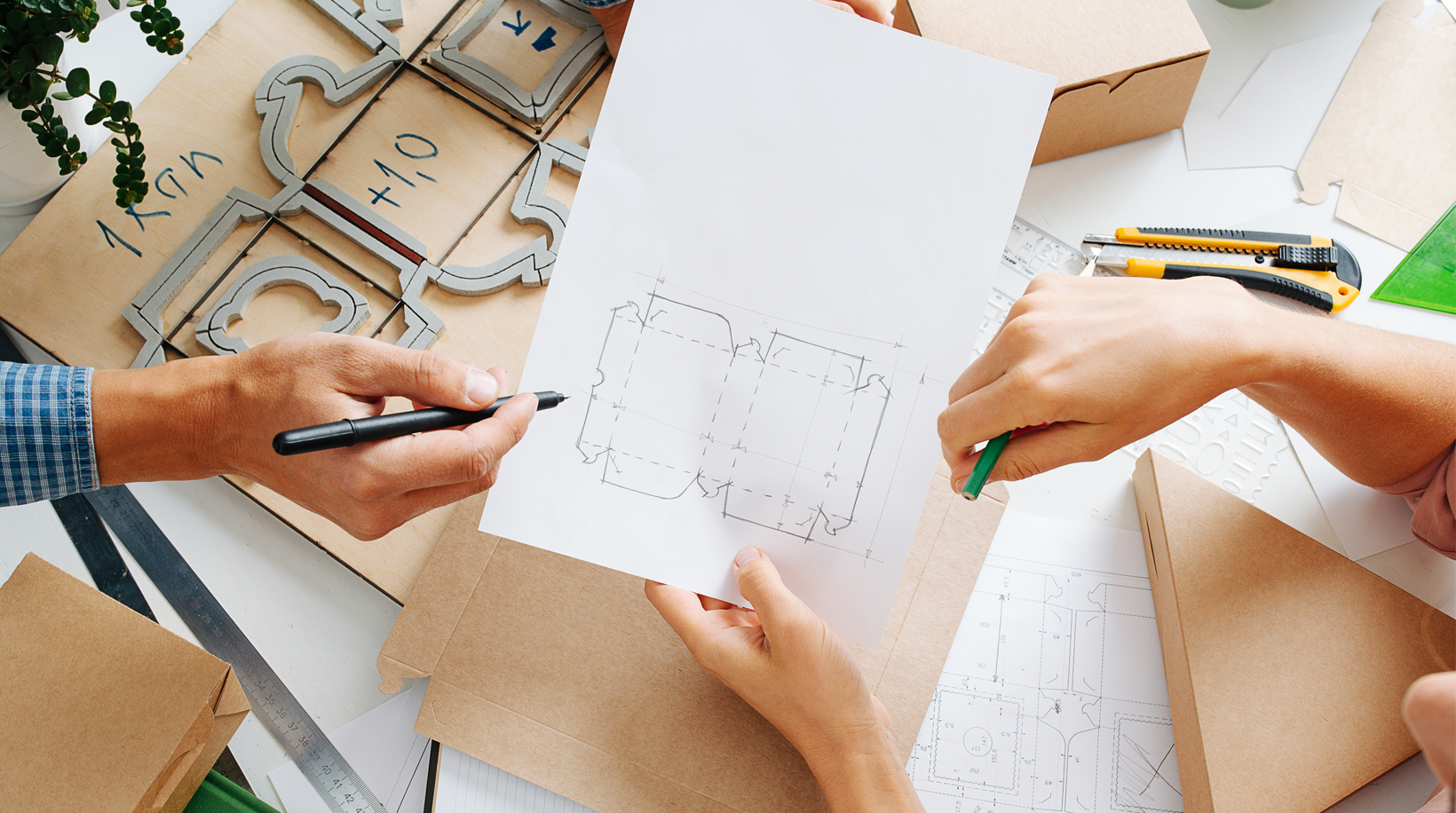
For a packaging or hygiene solution to be designed with a smaller environmental footprint, decisions have to be made before the product even gets to the drawing board. That's one of the bases of the "eco-design" concept. Cascades uses the fundamentals of eco-design to guide the development of its new products and innovates by seeking to reduce their footprint during their life cycle.
Eco design, guided by life cycle assessment (LCA), helps identify opportunities for improvement early in the product creation process, while making sure that impacts don’t just get displaced from one stage of the life cycle to another. For example, if the materials used in a packaging product are replaced with alternatives perceived as having a lower environmental impact, but that make the product non recyclable, this could increase its overall footprint.
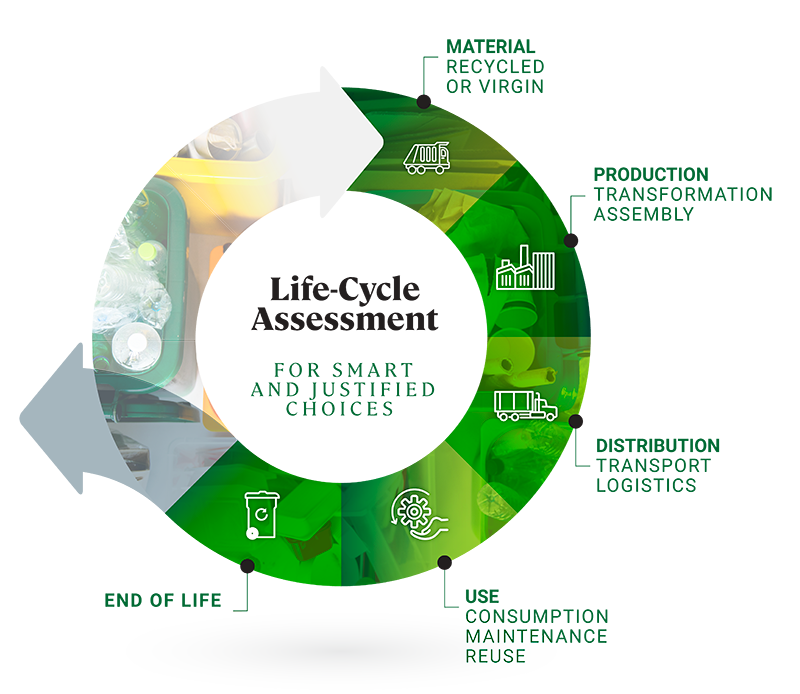
From the choice of inputs to end of life
Based on Cascades’ experience with LCAs conducted on its products, using recycled material instead of virgin material to manufacture a product generally has a positive impact on its environmental footprint.
Obviously, sourcing recycled inputs requires that recyclable products are available on the market. Although we talk about a product's "end of life," the real choices are made at the beginning of the eco-design process. There are many factors that influence where a product will wind up once it has fulfilled its role and whether it makes an actual contribution to the circular economy.
For example, the transparency and color of a package can influence its recyclability potential. The addition of certain additives to hygiene solutions, by their nature or quantity, can compromise the solutions' compostability.

From the moment a product is designed,
choices can influence its path and the size of its footprint.
Cascades' experts know the nuances of eco-designing and developing packaging according to criteria that promote their potential for a second life.
The marriage between container and content
LCA can also highlight determining factors beyond the product itself. For example, when you consider the full life cycle of a food, it generally has more impact than its container. So protecting it properly is an essential part of the equation.
Eco-design can help develop packaging that reduces food waste. The materials used, conservation technology, design, among more, are ways of adapting packaging to the food it protects to extend shelf life and minimize loss.

LCA provides a comprehensive view that helps target action priorities to truly reduce a product's environmental impact with reliable data to back it up.

Subject matter experts
Cascades supports its customers in their transition to more environmentally friendly products. Many of our hygiene and packaging solutions undergo a life cycle assessment with its reculting data helping our clients make informed choices based on science.
Articles
Articles
Articles
Articles

Articles
Articles